
Technology is now part of everyday life, so helping children become confident and thoughtful digital learners is an important part of modern early education. However, technology in early learning should never replace the precious experiences children need most: play, movement, conversation, creativity, relationships and time outdoors.
At Rainbow Hut Early Learning Centre Prestons, we use technology carefully and purposefully. Our educators introduce videos, apps, smart boards and online resources as tools to extend children’s curiosity and support fun learning, not as substitutes for hands-on discovery.
As a small family owned childcare service, we believe in building long-term relationships with children and families. Our children-first approach guides every decision, including how and when technology is used.
Rainbow Hut Early Learning Centre has three locations (Prestons, Liverpool and Blacktown) each committed to providing a nourishing, inclusive and growth-oriented environment for young children.
Why technology can be valuable in early learning
When used thoughtfully, digital technology can support children to:
- Explore ideas through interactive stories, images, music and videos
- Develop early communication, literacy, numeracy and problem-solving skills
- Represent their thinking through photographs, drawing, audio and simple digital creations
- Learn about different cultures, languages, people and places
- Build confidence with age-appropriate digital tools
- Collaborate with educators and peers rather than learning in isolation
- Connect digital experiences with real-world play and investigation
The Early Years Learning Framework (EYLF) recognises that children learn through active exploration, relationships and communication. Technology can complement this learning when it is intentional, engaging and connected to children’s interests.
At our early learning centre in Prestons, educators consider the purpose behind every digital experience. We ask: What will children learn? How will they participate? What hands-on activity can extend the experience afterwards?
Our approach: technology supports play. It does not replace it
Children need rich opportunities to build, create, move, imagine and communicate. For this reason, technology is only one part of our broader program.
A digital activity may lead to:
- Building a bridge with blocks after watching a short video about construction
- Drawing a character or retelling a story after listening to an interactive book
- Exploring natural materials after viewing images of insects or plants
- Singing and moving to a song before creating a related dance or game
- Using photographs to document a group project and discuss what children discovered
- Investigating shapes, numbers or patterns before practising these concepts with physical materials
This balance helps children understand that screens and devices are tools for learning, not the destination. Fun and learning continue when the device is put away.
Our educators combine digital resources with books, puzzles, sensory experiences, dramatic play, loose parts, music, art, outdoor exploration and meaningful conversations. These experiences support children’s physical, social, emotional and cognitive development in a well-rounded way.

How we balance screen time at our Prestons centre
Families often ask how much screen time is appropriate for young children. Rather than treating technology as a passive activity or relying only on a number of minutes, we focus on quality, purpose, participation and balance.
At Rainbow Hut Prestons, technology use is designed to be:
Short and intentional
Digital experiences are selected for a clear reason. An educator may use a short video to introduce a topic, an interactive story to encourage discussion, or an app to support a specific learning goal.
Social and supported
Children are encouraged to experience technology with an educator or alongside their peers. We talk, ask questions, make predictions and share ideas. This makes the experience interactive instead of isolating.
Age-appropriate
Resources are chosen with children’s developmental stages, interests and abilities in mind. Our Penguins room for children aged 0–3 focuses on warm relationships, sensory exploration, early communication and simple shared digital experiences. In the Koalas room for children aged 3–5, technology may support school readiness, creativity, inquiry and communication.
Balanced with active learning
Every digital experience sits within a wider daily rhythm that includes movement, rest, outdoor play, social interaction and hands-on learning. Children are encouraged to explore with their whole bodies and all their senses.
Connected to children’s interests
If children are interested in animals, space, music, transport or family traditions, technology can help extend their questions. Educators then provide real materials and experiences that allow children to investigate further.
The result is a more balanced approach in which technology adds value without taking over children’s day.
Interactive learning through videos and apps
Videos and apps can be engaging when children are invited to think, respond and participate. At our childcare Prestons location, educators use selected digital resources to stimulate curiosity and support purposeful learning.
For example, children may:
- Pause a story and predict what will happen next
- Identify sounds, colours, shapes or patterns
- Talk about characters’ feelings and actions
- Follow movement, music or language activities
- Use a simple drawing tool to express an idea
- Compare digital images with real objects
- Work with an educator to revisit a classroom project
The educator’s role is essential. A high-quality app or video does not teach by itself. Children benefit most when a trusted adult guides the experience, adds language, listens to children’s thinking and connects the activity to the world around them.

Building digital literacy from an early age
Digital literacy is more than knowing how to tap a screen. It includes learning how to use technology thoughtfully, safely and creatively.
In age-appropriate ways, we help children begin to understand:
- How to handle devices carefully
- How to listen and take turns when sharing a device
- How to ask permission before taking a photograph
- How to communicate kindly and respectfully
- How to recognise that adults help choose safe and suitable resources
- How images, sounds and words can communicate meaning
- How technology can help us create, investigate and share ideas
These small lessons build important foundations for future learning. Children begin to see themselves not only as technology users, but also as creators, communicators and thoughtful members of a community.
Our approach also reflects the diversity of the children and families we welcome. Digital stories, music and language experiences can introduce children to different cultures while encouraging respectful conversations about identity, belonging and individual beliefs. This complements our commitment to multiculturalism, inclusion and respect for every family.
Technology and school readiness
Technology can contribute to school readiness when it supports the skills children will use in future learning environments. It may help children practise:
- Listening and following instructions
- Recognising letters, sounds, numbers and patterns
- Sharing ideas with a group
- Waiting, taking turns and cooperating
- Expressing creativity through images, sounds and stories
- Asking questions and investigating answers
- Reflecting on their own work
However, school readiness is much broader than digital confidence. Children also need independence, emotional resilience, communication skills, physical coordination and the ability to form positive relationships.
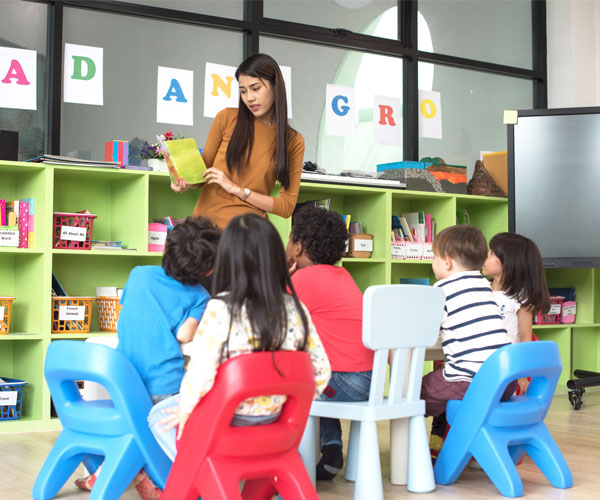
Our School Readiness Program brings these areas together through fun-learning experiences. Technology is used as one carefully considered resource alongside storytelling, role play, literacy, numeracy, creative expression, fine motor activities and outdoor play.
Working in partnership with families
Technology habits are strongest when families and educators communicate openly. We welcome questions and feedback about the resources children encounter, how technology is used and how digital experiences can be extended at home.
Families may like to ask:
- What was the learning purpose of the digital activity?
- Was my child using technology individually or with others?
- What did the experience lead to afterwards?
- How can we continue the conversation at home?
- Which books, outdoor activities or hands-on experiences connect with the topic?
At Rainbow Hut, family partnerships are an important part of children’s learning. We share information about children’s interests and progress and value the knowledge families bring about their child.
For broader guidance, families can explore Early Childhood Australia’s Statement on young children and digital technologies and learn more about the Early Years Learning Framework.
A thoughtful approach for growing minds
Technology can be a positive part of early childhood when it is used with care, intention and professional judgement. At Rainbow Hut Early Learning Centre Prestons, our educators focus on the child first, ensuring that digital tools support, not replace, the relationships, play and real-world experiences that matter most.
We are proud to provide a nourishing early learning centre in Prestons where children can explore technology safely, creatively and collaboratively while continuing to learn through movement, imagination, nature and friendship.
To discover more about our programs, including interactive learning, the EYLF and school readiness, visit our Rainbow Hut programs page. You can also contact our Prestons centre or join our waitlist.
BOOK A TOUR TODAY AND DISCOVER HOW FUN, BALANCED LEARNING CAN HELP YOUR CHILD GROW!


